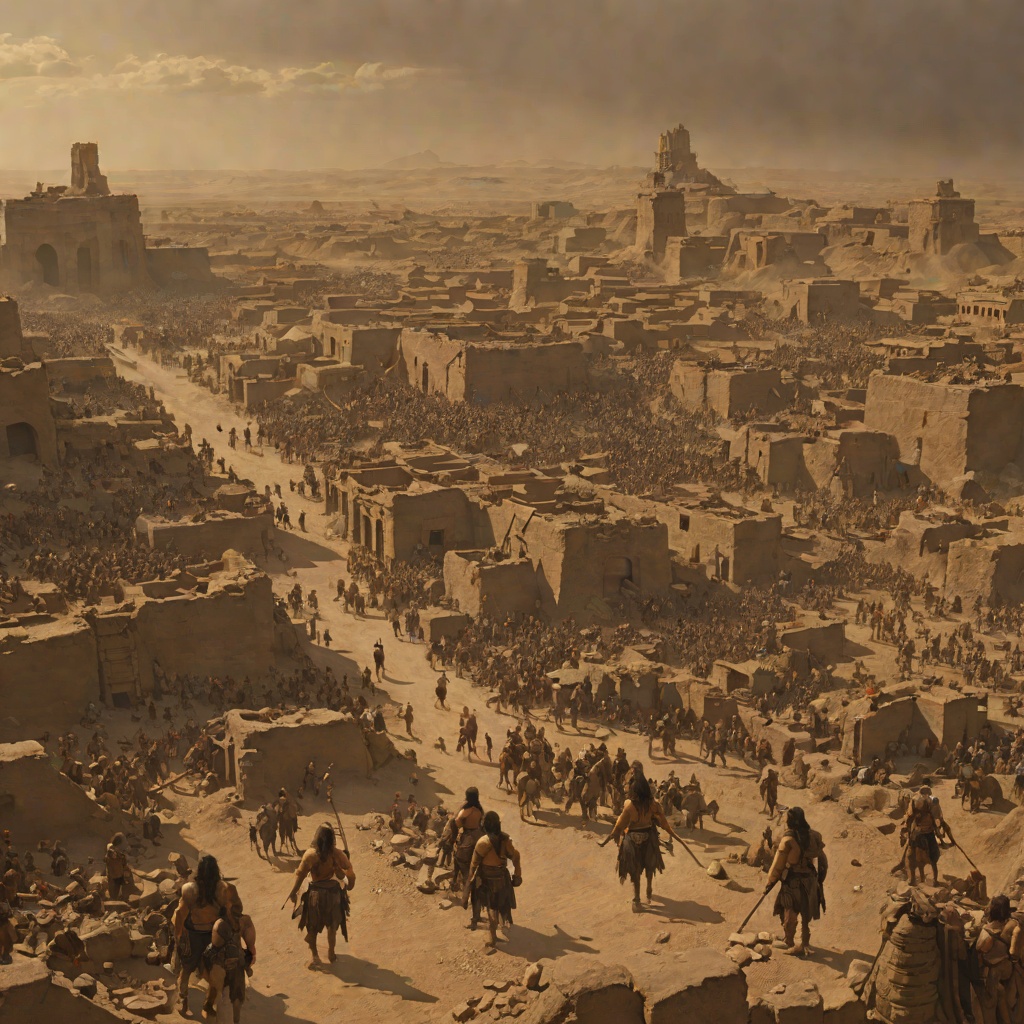
Road to paradise
Conan the BarbarianRoad to paradise is the recurring promise of the Cult of Set, a seductive phrase that frames death not as an end but as a blessed liberation. Throughout Conan's journey, the expression serves as the cult's recruiting mantra, its ritual catechism, and ultimately its most profound deception. The promise stands in direct opposition to Conan's Cimmerian worldview, in which death is ever the enemy, and the tension between these two conceptions of mortality drives the narrative's central conflict. The phrase appears at critical junctures—in the drugged streets of Shadizar, in the Mountain of Power's amphitheatre, and in the cult's final gathering—each time revealing more of the cult's true nature and Conan's growing resistance to its seductive lies.
The Cult's Promise of Death as Liberation
The road to paradise is first encountered in Shadizar of Zamora, the crossroads of the world, where Conan witnesses a procession of the Cult of Set. Girls and young women, some scarcely more than children, dance and chant to the rhythm of tambourines, draped in soiled white garments with garlands of wilted flowers crowning their unbound hair. Behind them march ranks of youths beating drums and making discordant music with cymbals, lyres, and plaintive flutes. All move with glazed eyes, unaware of the scene about them, like dreamers walking in their sleep. Robed men with shaven pates bear brazen pots of smouldering incense, filling the air with seductive sweetness. The procession wends its way toward a slender dark tower that pierces the sky, draped in shadows despite the brilliance of the day. As the marchers prepare to enter the tower's gaping doorway, a chant arises: "Doom... Doom... Doom..." The young men who follow, scarcely more than boys, stagger along with faces blank and drained of colour, lashing their naked flesh with whips made of serpents' hides and barbed with snakes' fangs, so that each stroke beads their flesh with blood. Seemingly unaware of pain, they chant as they go: "Doom... Doom... Thulsa Doom... Thulsa Doom..."
A merchant warns Conan that the servants of Set are deceivers who worship Death itself. Conan is shocked, for to him Death was ever the enemy. The merchant explains that they would murder their own parents, thinking to confer a boon by relieving them of the burden of life. This early encounter establishes the cult's fundamental inversion of values: what Conan regards as the ultimate enemy, the cult venerates as the ultimate good. The road to paradise is thus revealed as a road to death, and the cult's promise of liberation is exposed as a justification for murder.
The Mountain of Power and the Seduction of the Pilgrims
At the Mountain of Power, the road to paradise becomes a literal path that pilgrims must follow. A girl in a sing-song monotone murmurs to Conan, "You must give up all that you hold, tall pilgrim. You must see yourself in clear water, as you have never seen yourself before." Copying the reply of the pilgrim who preceded him, Conan intones, "I wish to be cleansed." The girl smiles vaguely at him, and Conan becomes aware that she does not really see him—she is drugged. Unaware of his agitation, she hastens through the prescribed words, devoid of warmth and meaning: "You are safe now from the perils of the road. We are all safe here in the shadow of the mountain. Fear no more; for this is the road to paradise!"
The phrase is thus revealed as a scripted formula, repeated mechanically by cult members who have been stripped of their individuality and their capacity for genuine feeling. The road to paradise is not a promise of salvation but a tool of control, spoken by those who have themselves been controlled. When a priestess later explains the cult's protection to Conan, she answers soothingly, as to a frightened child: "Very often from ourselves. Seldom do we know what is good for us; always are we beset with doubts and fears. We are so blind that rarely can we discern the path of truth. Only the Master can set our feet upon the path to paradise." The promise of paradise is thus coupled with a doctrine of helplessness—human beings cannot find the path themselves; they must surrender their will to the Master, Thulsa Doom.
The Doctrine of Sacrifice and the Great Cleansing
In the Mountain of Power's amphitheatre, Thulsa Doom himself articulates the full doctrine behind the road to paradise. Raising his arms majestically, he turns his palms down, and the chanting ceases upon the instant of the gesture. His resonant voice rises and falls like the tolling of a bell as he asks his followers: "Who amongst you fears the warm embrace of death? When I, your father, ask it, will you take life for me? Will you strike true to the infidel heart, whether it be the heart of friend, or lover, or loved one in your former life?" The catechism continues: "Will you slip the silken noose over the heads of Set's enemies? In the wide world, will you stay true, ignoring the blandishments of the leaders, judges, and parents who have taught you falsely? Will you clutch the hilts of your daggers and spill the heart's blood of the infidels, to give them the infinite benison of eternal peace?"
The road to paradise is thus explicitly framed as a road of murder—killing others to grant them the "infinite benison of eternal peace." The cult's promise of paradise justifies not only self-sacrifice but the sacrifice of others, including friends, lovers, and loved ones from one's former life. Doom's litany continues: "You will feel naught but joy when you perform your duty to your god and lord, when you strike for Set and Doom, when the infidel bows before the blade, the cord, or the bowstring, accepting the inevitable. You will grow in love of the Dark Master, the Wise Serpent, in the embrace of whose coils lies eternal life and bliss unutterable; for the day of Doom is at hand, the day of the Great Cleansing." The road to paradise culminates in the Great Cleansing, a night of blood and fire in which all who stand against the cult—parents, teachers, judges—shall depart, so that the earth may be cleansed and ready to receive the god they worship.
The Garden Demonstration and the Power of Death
The most chilling demonstration of the road to paradise occurs in Doom's garden, where the cult leader reveals the true nature of his power. A young girl, her childish face suffused with joy, poises for a moment at the edge of an embankment and then, without a glance at the youth beside her, leaps from the wall and falls with a heavy thud on the tiles of the garden walk below. Conan averts his eyes from the doll-like broken body. Doom laughs, the music of his laughter spun through with a note of triumph, and declares: "That is strength, boy—that is power! It is strength against which the hardness of steel or the resilience of human flesh are as naught. What is steel, compared to the hand that wields it; what is the hand, without a mind to command it? There is the secret of strength. Steel, bah!"
Doom then turns to the weeping lad who stands immobile, looking down at the broken body of the girl he loved. With a false smile lighting his dark visage, he whispers a command: "Join her in Paradise, my son." Without hesitation, moving like one walking in a dream, the boy unsheathes a small, jewelled dagger and plunges the sharp blade into his heart. The sun sparkles on the fountaining blood that pours from the wound, as the boy poses, statue-like, atop the wall. Then suddenly he crumples and, pitching forward, falls dying on the body of the girl. There is a look of triumph on the face of Thulsa Doom as he turns to regard the barbarian. "I have," he smiles, "a thousand more like them."
The road to paradise is here revealed in its full horror: it is a road of obedient self-destruction, walked by those who have been so thoroughly indoctrinated that they will kill themselves at their master's command. The girl's leap and the boy's self-stabbing are presented by Doom as demonstrations of his power—power over life and death itself, power that makes steel and flesh as naught. Yet Conan's impassive face, the set of his bruised shoulders, seems to the cult leader to diminish his power, to offer an unspoken insult to one unused to insults. The barbarian's body is in chains, but his soul remains free.
The Final Reversal and the Meaning of Steel
In the great temple, the Faithful of Set gather to hear the exhortation of their master. Hundreds of candles throw a dim radiance over the chamber, reflecting the eager faces of the congregation. The commingling of young voices, flutes, and brasses makes solemn music that reverberates through the cavernous hall. All become silent as Thulsa Doom, resplendent in his reptilian armour, mounts the dais and faces his followers. His eyes are dark and filled with sorcery, but there is no humanity in them. He intones: "The day of doom is here. The purging is at last at hand. All who stand against us in high places, all who have lied to you and tried to turn you from me—parents, teachers, judges—all shall depart in a night of blood and fire. Then shall the earth be cleansed and ready to receive the god we worship." The listeners moan in ecstasy: "Set!"
Before the frozen faces of the faithful, Doom's neck lengthens. His jaws elongate; his nose shrinks and disappears; his forehead retreats; his lips thin and vanish. His dark eyes round into lidless orbs and a purple tongue flicks out to test the air. Thulsa Doom bears the scaly serpent head of the ancient snake-men—those timeless enemies of all mankind. As one, the congregation gasps. A shudder ripples through the silent throng. Conan's sword sighs as it sweeps up in a great arc and clove the swaying snake head from the human body. The body falls backward and lies, writhing, like a trampled serpent, at the top of the wide steps. The severed head rolls slowly down the long flight of stairs and comes to rest beside the fountain pool.
Conan watches the gory object fall into the purple shadows of the dying day. Then, half to himself, he speaks: "My father was the light of day; Thulsa Doom, my night. Yet in one thing he spoke true. What matters is not the steel within the blade, but the steel within the man." The road to paradise, which promised eternal life and bliss unutterable in the embrace of the Wise Serpent's coils, ends with the serpent's head severed and rolling down the temple steps. The cult's promise of death as liberation is answered by Conan's affirmation of life and the human will. The steel within the man—his defiance, his refusal to surrender to the seduction of death—proves stronger than the cult's doctrine of sacrifice. The road to paradise is revealed as a lie, and the true path is the one Conan walks: the way of the warrior, which is ever death, but death faced with open eyes and a free soul, not death embraced as a drugged and obedient follower.
The expression thus traces the arc of the entire narrative: from the cult's seductive promise of paradise through death, to the demonstration of that promise's power over the indoctrinated, to its final refutation in the temple. The road to paradise is the road of the Cult of Set, and Conan's journey is the road away from it—a road of suffering, struggle, and ultimately, the reclaiming of his own life and death.